Poliamoria w watolinie/Polyamory in fluff
[English below]
Latem 1663 roku francuski fizyk, dyplomata i sędzia Balthasar de Monconys (1611–1665) podróżował po południowej i północnej części Niderlandów. W Hadze odwiedził pana de Zulcon, właściciela zamku i wiosek nad rzeką Waal, który pokazał mu gniazdo nieznanego gatunku ptaka. Było ono zbudowane z puchu kwiatów wierzby, „i tak misternie skonstruowane, że przewyższało dzieła tkaczy pończoch pod względem miękkości i grubości”.
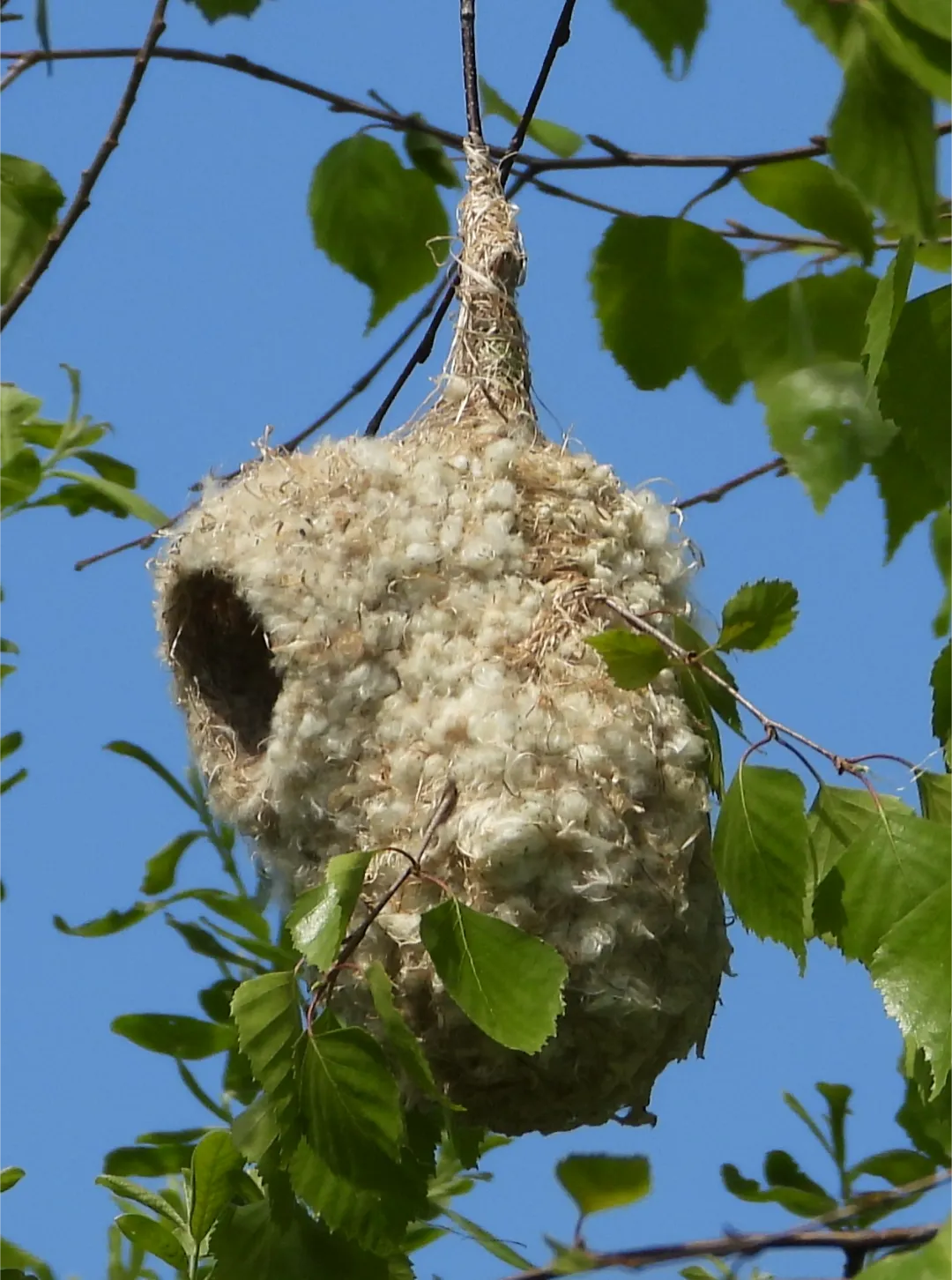
Gniazdo wisiało na końcu gałęzi wierzby, miało kształt trzewika, z jednym otworem, który wydawał się nieproporcjonalnie mały w stosunku do jego objętości.
Opis De Monconysa (1666) pasuje wyłącznie do gniazda remiza, gotowego do użytku lub prawdopodobnie wykorzystywanego do lęgów. Pewnie gniazda remiza nie były rzadkością w tamtym rejonie, ponieważ pan de Zulcon obiecał pokazać Monconysowi kolejne takie gniazdo.
Kto szukał kiedykolwiek gniazd remizów, ten wie, że są one jednak dość dobrze ukryte wśród listowia, dlatego słaba znajomość tego gatunku w owych czasach zupełnie nie dziwi.
Nie dziwi mnie też zachwyt nad misternością wykonania gniazd, ani to, że w dawnych czasach robiono z nich buty dla małych dzieci. Trwałość i precyzja wykonania remiziej "tkaniny" zapewniła jej podobno jeszcze inne zastosowania, np. jako ocieplenie do ubrań. Nic dziwnego - ściany gniazda są utkane z puchu wierzby,topoli i wełny, oraz pajęczyny, która służy za lepiszcze. A wszystko to wplecione w siatkę włókien roślinnych, które tworzą coś w rodzaju kanwy. Od razu nasuwa się porównanie z... watoliną, którą dawniej, przed epoką poliestru, ocieplano kurtki i płaszcze.
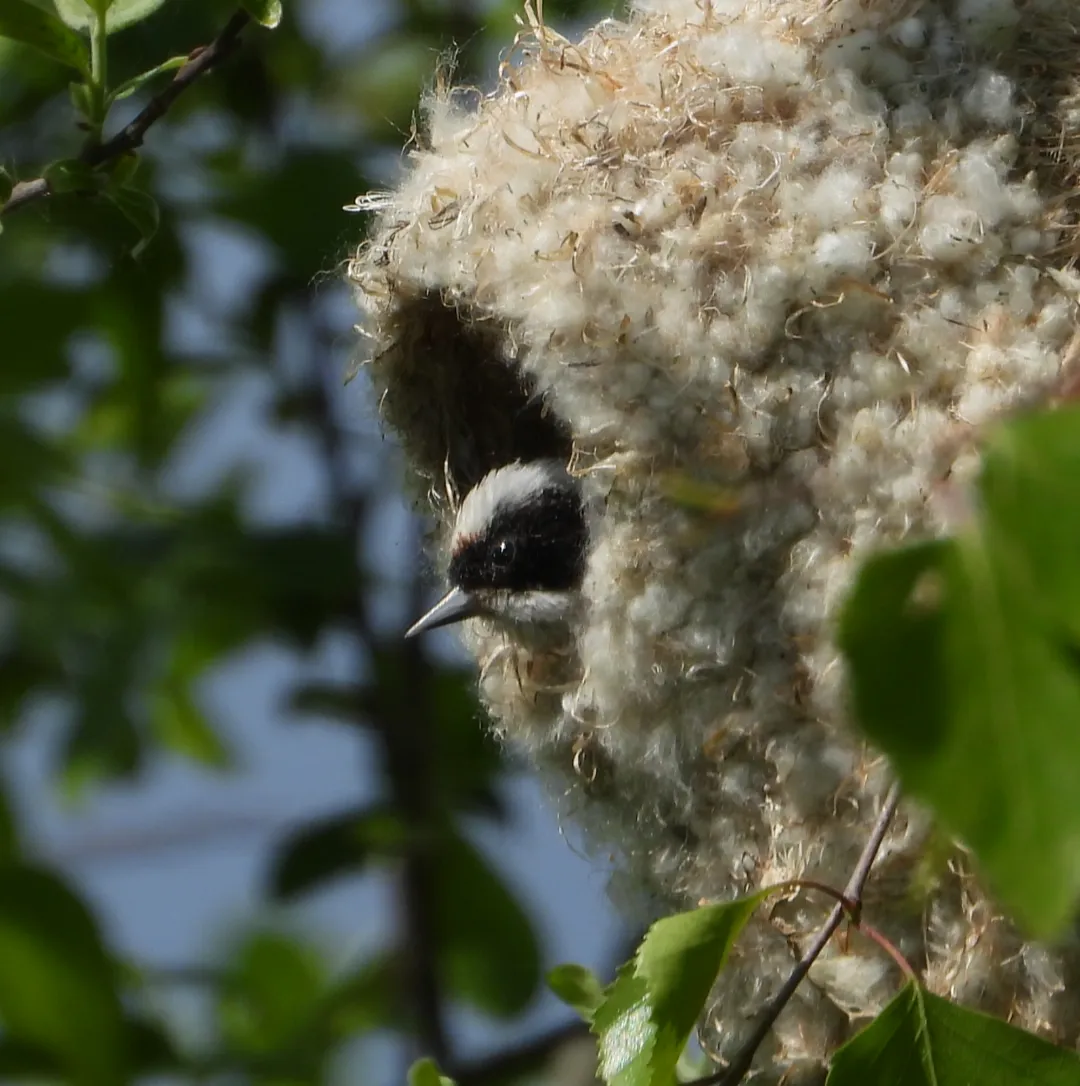
Nie od rzeczy będzie też porównanie z moherowym swetrem. Gniazdo to skondensowany puch, który w swetrze byłby rozciągnięty na metr kwadratowy. Tu, sfilcowany, tworzy grubą, elastyczną warstwę, znakomicie chroniącą przed zimnem i wiatrem.
Czy zatem podbieranie gniazd mogło być przyczyną zmniejszania populacji tego ptaka? No cóż, gdyby nie rozwiązły tryb życia remizów, można by tak przypuszczać. Jednakże 1/3 gniazd z jajami lub pisklętami jest porzucana na pastwę losu bez ingerencji człowieka. Zatem przyjmijmy, że nasi wielce kochający przyrodę przodkowie wykorzystywali tylko te zaniechane gniazda.
Nie, oczywiście w to nie wierzę. No cóż, życie to zawsze walka o przetrwanie. Jeśli remizom nadal się udaje, to znaczy, że ich ilościowa strategia nie jest najgorsza. Ilościowa, nie jakościowa: dużo gniazd, dużo partnerek/rów, dużo porzuceń lęgu, brak trwałych par, brak inwestycji rodzicielskiej po złożeniu jaj (u części osobników). W literaturze ornitologicznej mówi się wprost o fakultatywnej opiece rodzicielskiej — każde z partnerów może porzucić jaja, a nawet lęg, i szukać kolejnego partnera, zostawiając drugiemu wybór: albo zajmujesz się sam/sama, albo nikt się nie zajmie i umrą.
Efektem jest właśnie ów wysoki odsetek opuszczonych gniazd. Z punktu widzenia ewolucji strategia jednak działa całkiem nieźle: remiz jest gatunkiem ekspansywnym, jego zasięg w XX wieku wyraźnie się powiększył na zachód Europy. Ptak porzuca gniazda hurtowo, ale buduje je równie sprawnie — i najwyraźniej jakoś mu się to opłaca. Taka poliamoria, choć bez grup wsparcia na Facebooku.
English translation
In the summer of 1663, the French physicist, diplomat, and judge Balthasar de Monconys (1611–1665) traveled through the southern and northern parts of the Netherlands. In The Hague, he visited Monsieur de Zulcon, the owner of a castle and villages along the Waal River, who showed him the nest of an unknown bird species. It was built from willow seed down and was "so intricately constructed that it surpassed the work of stocking weavers in terms of softness and thickness."
The nest hung from the end of a willow branch and was shaped like a shoe, with a single opening that seemed disproportionately small compared to its volume.
De Monconys' description (1666) fits only the nest of a Eurasian penduline tit, either ready for use or likely occupied for breeding. It is probable that penduline tit nests were not uncommon in that area, as Monsieur de Zulcon promised to show Monconys another such nest.
Anyone who has ever searched for penduline tit nests knows that they are quite well-hidden among the foliage; therefore, the limited knowledge of this species at that time is not surprising at all.
I am also not surprised by the admiration for the intricacy of the nests' craftsmanship, nor by the fact that in the old days, they were used to make shoes for small children. The durability and precision of the penduline tit's "fabric" reportedly ensured other uses as well, such as insulation for clothing. It is no wonder— the walls of the nest are woven from willow and poplar down, wool, and spiderwebs, which serve as a binder. All of this is woven into a mesh of plant fibers that create a kind of canvas. A comparison immediately comes to mind with... batting, which in the past, before the era of polyester, was used to insulate jackets and coats.
A comparison with a mohair sweater would also be quite fitting. The nest is essentially condensed down which, in a sweater, would be stretched over a square meter. Here, once felted, it creates a thick, elastic layer that provides excellent protection against the cold and wind.
Could the harvesting of these nests have been a cause of population decline? Well, were it not for the "promiscuous" lifestyle of penduline tits, one might assume so. However, one-third of nests containing eggs or chicks are abandoned to their fate without any human interference. So, let us assume that our nature-loving ancestors only utilized these forsaken nests.
No, of course I don't believe that. Well, life is always a struggle for survival. If penduline tits are still managing, it means their quantitative strategy isn't the worst. Quantitative, not qualitative: many nests, many partners, many abandoned clutches, no stable pairs, and a lack of parental investment after egg-laying (in some individuals). Ornithological literature speaks directly of facultative parental care — each partner can abandon the eggs, or even the brood, to search for another mate, leaving the other with a choice: either you take care of it yourself, or no one does and they will die.
It results in that high percentage of deserted nests. From an evolutionary perspective, however, the strategy works quite well: the penduline tit is an expansive species, and its range significantly expanded toward Western Europe during the 20th century. The bird abandons nests wholesale, but builds them just as efficiently — and apparently, it somehow pays off. A case of polyamory, albeit without the Facebook support groups.
Najnowsze wpisy na blogu